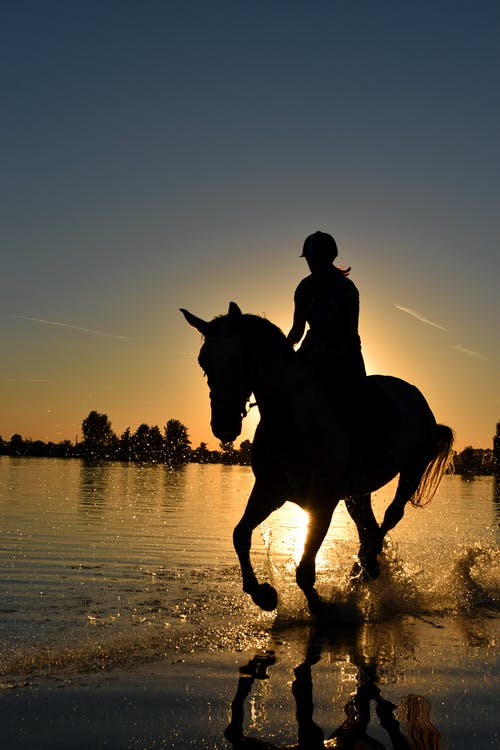
rein of a horse

Have you ever felt you had lost control of the rein of your life? Listen to the words of our psalmist.

Lord God All-Powerful,
my King and my God,
sparrows find a home
near your altars;
swallows build nests there
to raise their young.

You bless everyone
who lives in your house,
and they sing your praises.
You bless all who depend
on you for their strength
and all who deeply desire
to visit your temple (Psalm 84:3-5 CEV)

Losing the rein makes the journey a challenging adventure. Perhaps you have been lost far, far from home. The venture shipwrecked, your travels blown about by the winds and the seas.

There is a point when you are away when you just want to be home.

We recently took a trip to Italy and Greece that required a nine and a half hour plane ride home. The trip was fantastic, but the journey home seemed even longer because once we left the ground on a plane in Rome, we were ready for the journey to be over. We wanted to be home.

Longing for home

Psalm 84 is a psalm of longing – of wanting to be home. It is a psalm of wanting to be home in God’s house. It is a song of the sons of Korah – something that we will talk about a little more later in the study. Psalm 84 is one of four psalms in the third section of the Psalms (Psalm 84, 85, 87 and 88). There are seven psalms of Korah in the second section (Psalm 42, and 44-49).

We can assume that the psalmist was far away from the Tabernacle or Temple. Perhaps there was turmoil in his life, fleeing for safety, unsure of his next move. He envied the birds that had built their nests near the sacred home of God’s presence. At least they had a home near the presence of the Lord.

Perhaps the psalmist had a soft place in his heart “thinking about home” because he had spent so much time away from it. When it came to thinking about his God, the psalmist was burdened for a place for God to dwell among His people. There was a deep desire in his heart to be secure and comfortable, permanently in the presence of his God.

Away from God

Away from God, there is a longing for moments in God’s presence at the Tabernacle. The soul is literally withering on the vine, away from the nourishment found in the presence of God. For the one who follows God, there is something refreshing about worship in God’s house, in God’s presence. Everyone could find a place in God’s house – king or servant.

There is something refreshing about the comforts of home. It is easy to take home for granted. It becomes common place. We have been talking about finding an Autumn Refreshing from the Father. We explored the idea of the Autumn Rain in the midst of the heat of our desert. This week, let’s think about a different kind of Autumn Rein, the One who helps us find our way back home. How refreshing it is when we allow God’s word to be the rein in our lives.

Rein: Power under Control

The psalmist makes a very poignant comparison in these three short verses. He begins by pointing us to the one with power – the almighty God.

Most of us spend our lives either thinking we have control or trying to gain control of our lives. A recent article on the Psychology Today website by Diane Dreher, Ph.D. stresses that one of our basic human needs is a sense of control. The article says that this desire to have a choice, that our actions make a difference is known as the locus of control (LOC). The more internal our LOC, the more we believe our own efforts determine what happens in our lives. The more external our LOC, the more we believe that outside forces actually move and dictate our behaviors.

The research of psychologists links external LOC with poor mental and physical health issues. The person who has high external LOC tends toward passivity, anxiety, and depression. Conversely a person with high internal LOC tends to lean into happiness, health and a better ability to cope with life.

Calculating mistakes

I wonder if there is just a slight miscalculation in the findings. What if the negative feelings and poor health issues really come from the conflict of us trying to usurp control that we never actually had?

Think with me for just a moment. There are somethings that certainly are in our control. Getting a good night’s sleep, exercising, and eating healthy foods in sensible portions are all part of a healthy lifestyle and are within our control. But consider the myriad of things that are outside of your control. Natural catastrophes, poor or evil decisions of others, the choices and behaviors of our children, major health issues like cancer, the death of a loved one and the list can go on and on. Does our struggle really come from thinking that we can control the rein pf all these things?

Let the Father take care of your worries

Jesus teaches His disciples in the Sermon on the Mount about the dangers of being overwhelmed with concern about the things in this world.

25 I tell you not to worry about your life. Don’t worry about having something to eat, drink, or wear. Isn’t life more than food or clothing? 26 Look at the birds in the sky! They don’t plant or harvest. They don’t even store grain in barns. Yet your Father in heaven takes care of them. Aren’t you worth more than birds (Matthew 6:25-26 CEV)?

The apostle Peter’s first epistle carries the same advice: “God cares for you, so turn all your worries over to Him” (1 Peter 5:7 CEV).

God blesses the ones who look to Him for their strength. Here are three ways that God uses the reins to mold and shape our lives.

Rein and Control our Speed

When most people think of slowing down a horse, they think in terms of “putting on the brakes.” Rather than pulling the rein straight back to stop the horse, shifting them from side to side can send a message to slow down the process of movement. Skiers use side-to-side movement to control downhill speed. The reins don’t have to completely stop progress. They can help control the speed, simply slowing down the progress.

Do you remember the bubble-gum style song by Simon and Garfunkel in the late sixties called “The 59th Street Bridge Song?” The words that began the song urged us to “Slow down, you move too fast. You got to make the morning last.” Life travels past us at warp speed and we try to make it move even faster.

There are a handful of verses from the old Living Bible that have made a profound impact on my life. I am not always impressed with the paraphrase’s choice of words, but occasionally they stick with me in a way that I cannot seem to escape. One of these verses comes from the pen of King Solomon in the Old Testament. I remember the first time I read it, I was taken aback.

In the book of Ecclesiastes, Solomon writes,

It is better to spend your time at funerals than at festivals. For you are going to die, and it is a good thing to think about it while there is still time (Ecclesiastes 7:2 Living Bible).

An effective rein

The verse isn’t mean to depress you, although many will see it as a harsh, pessimistic statement. Almost everything that we do practices a similar philosophy. Stephen Covey’s incredibly successful book, The Seven Habits of Highly Effective People, singles out the truth of this verse in habit two. “Begin with the end in mind.”

The only way we do that is when we slow down, giving ourselves time to plan and prioritize our lives. Covey concludes the thought by saying “Your most important work is always ahead of you, never behind you.”

Cultivating patience

Here are a handful of reasons to cultivate patience in the fast-paced, frenzied bronco of a life that most of us are trying to break.

  • We are wanting transformation, not information. Paul tells us to not be conformed to the world, but to be transformed by renewing our minds (Romans 12:1-2). Eugene Peterson, author of The Message, writes, “A disciple is a learner, but not in the academic setting of a schoolroom, rather at the work site of a craftsman.”
  • Spiritual growth takes time. Jesus spent each day for three and a half years with His disciples. Moses spent forty years in the wilderness and desert. Paul spent years in the desert. Our microwave mentality does not allow for sufficient time to brew a seasoned disciple.
  • Understanding God is a process. Most complex subjects take time to hear, process and learn. We don’t begin studying math by learning calculus. We don’t learn to play an instrument by going through Beethoven’s symphonies. Expect to spend some time building a relationship with God.
  • Life changes. Heraclitus said, “The only thing that is constant is change.” The person that we are today – the needs that we have, the reasons that we reach to God – will be different tomorrow. The temptations of yesterday may not be blips on the radar of today. We must constantly seek God each day because in each day our needs are different.
  • Eternity is before us. Are we living these moments in light of eternity? Peter writes, “The end of all things is near” (1 Peter 4:7). We will discuss more of this passage in just a bit. The truth is we have all time of eternity.

Paul encourages the Ephesian Christians to redeem the time (Ephesians 5:16 HCSB). Making the most of our time requires slowing life down enough to plan and chart the courses that we want to pursue. Time management experts tell us to start a successful day by setting aside a few moments to think about what needs to be accomplished during the day. Plans can then be made to achieve the goals.

Rein and Control our Direction

The psalmist paints an interesting picture in verse five. The NIV translates the passage, “Blessed are those whose strength is in you, whose hearts are set on pilgrimage.”

The Christian is a disciple, a pilgrim on a journey. The experience is portrayed as a journey rather than a destination. Characterized by movement, adventure and discovery, life is not a peek from a stationary observation deck.

The Message translates a passage from the eleventh chapter of Hebrews this way:

The fundamental fact of existence is that this trust in God, this faith, is the firm foundation under everything that makes life worth living. It’s our handle on what we can’t see.

I could go on and on, but I’ve run out of time. There are so many more—Gideon, Barak, Samson, Jephthah, David, Samuel, the prophets. . . . Through acts of faith, they toppled kingdoms, made justice work, took the promises for themselves. They were protected from lions, fires, and sword thrusts, turned disadvantage to advantage, won battles, routed alien armies. Women received their loved ones back from the dead. There were those who, under torture, refused to give in and go free, preferring something better: resurrection. Others braved abuse and whips, and, yes, chains and dungeons. We have stories of those who were stoned, sawed in two, murdered in cold blood; stories of vagrants wandering the earth in animal skins, homeless, friendless, powerless—the world didn’t deserve them!—making their way as best they could on the cruel edges of the world (Hebrews 11:1-2; 32-38 MSG).

Using the Hebrews’ backdrop of Old Testament heroes of the faith, would you place together three interesting messages from the words of two prophets?

Isaiah shows the way

The grand prophet Isaiah writes,

Thus says the Lord, your Redeemer, the Holy One of Israel: “I am the Lord your God, who teaches you to profit, who leads you in the way you should go” (Isaiah 48:7 ESV).

God will lead us in the way that we should go. Earlier in the same book, Isaiah has indicated that

And your ears shall hear a word behind you, saying, “This is the way, walk in it,” when you turn to the right or when you turn to the left (Isaiah 30:21 ESV).

I am not sure how God does that. How does God whisper words behind us? Obviously it starts with God’s revealed Word in the Bible. The more that I know God’s Words the more likely it is that I will make the right applications to the choices that I make and the directions that I take.

The voices of God behind me may be the voices of other Christians who are offering guidance and encouragement. It may be words from the sermon on Sunday or the Christian broadcast on Tuesday’s program. Perhaps the voice may be our own conscience, especially if that voice has been molded and shaped by God’s Holy Spirit.

Don’t put it past God to use a voice outside of the faith. In times past God has used evil kings, heathen poets and psalm writers, and once God even put a voice inside a donkey.

Directions to Ninevah

Wander with me to one other Old Testament passage. This time it is from the reluctant prophet Jonah.

And should not I pity Nineveh, that great city, in which there are more than 120,000 persons who do not know their right hand from their left (Jonah 4:11 ESV).

Unless Nineveh is filled with dyslexic people or those who have failed their biology quizzes, this passage of Scripture must be taken in a symbolic or figurative way. Let’s think for a moment about how it might relate in a figurative sense.

Did you ever feel that you were being pulled in two directions? Comedian Flip Wilson used to make rationalizations for bad behavior by saying, “The devil made me do it.” Authors and painters have often gleaned that we have an imaginary little devil on the left shoulder and a little imaginary angel on the right.

The right from the left

You might be intrigued to know that our common usage of the word “left” comes from the Latin word meaning “sinister.” When Jesus spoke of the separation of the sheep and goats, the goats went on the left.

Most of the time, when the Bible uses the word “left” to describe more than the physical, it refers to the things of this world – the material, the worldly, the things that are not spiritual in nature. On the other hand (I know, pun intended), the “right” is used to describe the things that are spiritual in nature and those who have become spiritually awake. These are the ones who have ears to hear.

The example screams to us.

and you shall kill the ram and take part of its blood and put it on the tip of the right ear of Aaron and on the tips of the right ears of his sons, and on the thumbs of their right hands and on the great toes of their right feet, and throw the rest of the blood against the sides of the altar (Exodus 29:20 ESV).

Notice how specific the instructions of this verse appear. The blood, while literally being put on the right appendages of these men, were actually helping us see that the sacrifice was for Aaron and his sons, representing an anointing of spiritual wisdom and understanding.

Rein and Control our Weaknesses

How does God nudge us to the right and try to keep us from the left? One of the ways that He does this is by helping us control our weaknesses by the use of His rein. Let’s return to Peter’s words from his first epistle, the fourth chapter.

Remember, Peter has warned us that the end is near – it is certainly at hand. Because that is a truth that you can count on,

therefore be self-controlled and sober-minded for the sake of your prayers. Above all, keep loving one another earnestly, since love covers a multitude of sins. Show hospitality to one another without grumbling. 10 As each has received a gift, use it to serve one another, as good stewards of God’s varied grace: 11 whoever speaks, as one who speaks oracles of God; whoever serves, as one who serves by the strength that God supplies—in order that in everything God may be glorified through Jesus Christ (1 Peter 4:7-11 ESV).

In the middle of the passage, Peter tells us that we are using our gifts – which would include the indwelling presence of God’s Holy Spirit – as if we were stewards of the treasures with which God has entrusted us. Notice that we are actually stewards of God’s grace.

Weaknesses into strengths

Have you noticed there are instructions in many recipes which encourage the chef to “season to taste?” Use enough salt, use enough hot sauce to meet the desires of your taste. How much grace has God allotted to you to season your world? Season to taste.

If you want to make a difference in the world, notice that God is going to be working with you to change some of your weaknesses into strengths.

To begin with Peter instructs that self-controlled and sober-minded are goals. Would you consider those areas weak in your life? I certainly would. Self-control blossoms when God dictates the direction of life. There is debate about exactly what Peter means by the next phrase but he adds that it is “for the sake of your prayers.” Perhaps key to strengthening our weakness is including it in our prayer life. With God’s help, self-control molds our mission and ministry.

Doing the right thing

Doing the right thing in relationships with others seems to be a universal weakness. The secret to the activities with others is to let the love of God control your life (Colossians 3:16). Be careful when it comes to actions and behaviors. Even if we do the right thing, but grumble and complain about it or about the recipient of our behavior, we haven’t really turned our weakness around, have we?

Finally Peter says that when you speak, speak as one who is speaking the very words of God. Changes our communication a bit, doesn’t it? It is James that tells us that like the bit in the mouth of a horse, the tongue is a small feature but controls the entire power of the whole. Allow grace to lace your words.

Remember, when you allow God to have the reins of your life, you will find that the way He controls your life, directs your life, and strengthens your weakness provides you the refreshment of a cool autumn.

One of the challenges of constructing a website for visitors is making the site simple and intuitive enough that people can maneuver through it. It seems easy enough to me, but then I have been building it from the ground up and spending almost all my waking hours in it. To help you navigate the waters of the site, here is a brief description of the layout with some instructions.

The site itself is found at http://www.koinoniabiblestudies.com .   

KBS Home page When you go to the home page, you will find blogs that I have written over the last couple of years. I believe right now there are about 60 different articles within the site, but only a select few are on the front page. The article “Refreshing – God’s Autumn Providence” tells you a little about the reason that I am wanting to put an online study together.

KBS Home Page Top

Click on the title or the “continue reading to go to the article. You will notice at the top of the screen are the words “Koinonia Bible Studies” and three bars in the left corner that uncover a menu. These two items will be consistent on almost every page. Clicking the “Koinonia” logo will bring you back to the home page. Clicking the menu bars always uncovers something that is vital to the page.

Looking deeper

On the home page the menu uncovers a form for which you can sign up for the Bible Study. Your signature just helps me know who is coming to the site.

KBS Home Page Bible Study Sign Up

If you click on the article icon on the first page, the entire article will come on screen. You can scroll down through the article and read about my reasons and desire to form this group.

Refreshing Post


Are you a small group leader? Do you feel ill-equipped to be “teaching” content during your study? When all we do is “push play” on the streaming presentation or the DVD, questions are likely to arise that are difficult to handle. Often the small group can become just sharing everyone’s opinions. You can walk away feeling unsure of what the Bible really says and means – let alone knowing how to live it out in the real world.

Studying this content first will help you feel confident and secure that you are presenting what the Bible says without being concerned that you are leading people astray. The material has been written from the vantage point of fifty years of studying the Scripture. Studying for seven years at a Seminary, I earned the undergraduate Bachelor of Arts degree in Biblical studies, pastoral ministry and communication. Continuing my studies, I pursued and earned two Master’s Degrees – a Master of Arts and a Master of Divinity. I am affiliated with the non-denominational Christian churches. Southeast Christian Church, one of the nation’s largest congregations, is a part of that fellowship.

Autumn Refreshing

The November lessons are called “Autumn Refreshing.” Every new lesson series will have an introductory lesson that will provide background for the upcoming lessons. It really doesn’t contain a plan that you will teach, but it provides you with a context from which to teach.

Autumn Refreshing - Series Intro

Clicking on the menu bars on this page will provide a brief explanation of the structure of the webpages. You will see an explanation of the content of the menus. This menu will also feature the Scripture passage for the series in six different versions of the Bible. Finally the bottom of the menu has links to the other lessons in the series.

Scripture Versions & Lesson Links

Autumn Rain

If you click on the first lesson, Autumn Rain, the page will look similar to the design of the introductory lesson. There are a couple of interesting features in these lessons. If you hover over a Scripture reference, a window will pop up providing you with the verse of Scripture.

Autumn Refreshing - Lesson One - Autumn Rain

The menu for the actual lessons will all follow the same format. Clicking upper left menu bars will provide you with several things for the coming week’s lessons.

Autumn Rain Menu

At the top of the menu is a Bible Verse of the Day. The Bible verse changes every day to provide a new Scripture each day. In addition, you will find a verse each day that relates to our week’s lesson. The site also shares a brief devotional thought for the week. Eventually the devotional thought will change every day also.

Autumn Rain Handout & Discussion

Leave your mark on the site

At the bottom the lesson pages, there is a place for you to leave questions or comments. I encourage you to add to our knowledge with your thoughts and ideas. Let’s truly make this a learning community.

Comment Box

Leave your mark on your small group

Leaders of small study groups will find two helpful items at the bottom of the menu.

The lesson for each class will have a one page PDF lesson that you can click, view and print out. You are welcome to use this lesson handout and make as many copies as you need to make. The menu also has a handful of questions that you can use for discussion starters for the lesson.

Autumn Rain PDF Handout

There you have it. You have progressed through the site and one of the lessons. You can use it for your personal study or to share with your small group.

Let me know how your journey progresses.

Blessings,

Tom


When they reach Dry Valley,
springs start flowing,
and the autumn rain fills it with pools of water.
Your people grow stronger,
and you, the God of gods, will be seen in Zion (Psalm 84:6-7 CEV).

Do you dread the heat of the summer? How hot does it get in the summer where you live? What uncomfortable things are associated with your summers? We long for relief from the summer’s heat. We long for refreshment from the rain.

The heat of the summer is dreaded in Palestine even today. There is virtually no rain in the Mediterranean from May to October. The heat in the summer is so oppressive that as a rule people rest under cover during the middle of the day. Even on the mountains where the temperature of the air is lower, the sun is even more unrelenting because of the lighter nature of the atmosphere.

The first word of advice given to visitors to the Mediterranean is to protect themselves from the sun. The human body is about three-quarters water. Water is found inside cells, within blood vessels, and in-between cells. Water is constantly lost during the day, but is replenished by increasing our fluid intake.

In the heat of the summer

The heat of summer takes its toll on the body. Even low levels of dehydration can cause headaches, lethargy and constipation. The continuous summer sun often causes sunstroke, vomiting and even a loss of intellectual and mental functions. If dehydration continues, internal organs like the kidneys, liver and brain, can undergo severe damage.

Dehydration causes your blood to become thicker and more concentrated. Your heart has a more difficult time pushing the blood through the cardiovascular system. To make up for the struggle, your heart increases its rate to maintain blood pressure. When the dehydrated body is pushed, the risk of exhaustion and collapse increases.

Dehydration is treated by replenishing the fluid level in the body. It is most effectively accomplished by drinking clear fluids such as water, clear broths, frozen water or ice pops, and sports drinks like Gatorade. Interestingly some drinks appear to be quenching our thirst and aiding hydration when actually the drinks add to the dehydrating effects. Alcohol, coffee and sodas are diuretics which actually remove water from the body. We have to be careful what fluids we put into the body.

God is not only concerned about the effects of the physical heat upon the physical body, He is aware that the spiritual body can be affected by spiritual heat.

Wandering in the wilderness

The absence of water creates a desert – a constant reminder of dangers, hardships and even death. But the desert also plays a symbolic role for God’s people. Because of Israel’s sins, “I will stretch out My hand against them, and wherever they live I will make the land a desolate waste, from the wilderness to Diblah. Then they will know that I am the Lord” (Ezekiel 6:14 HCSB).

In the Bible many passages speak of actual physical deserts and wilderness areas. John the Baptist came preaching in the wilderness. Jesus was led into the wilderness for forty days during His temptation experiences with Satan. But like the time of the Messiah in the wilderness, the desert is often used to the spiritually parched times in our lives where we are drawn to our relationship with God for the quenching of thirst.

The dangers presented by the desert to human survival can be a warning of what life becomes when God is banished from our lives. The desert can be a sign of the punishment that is awaiting those who are rebellious against God (Psalm 68:7). It can be the result of leadership gone astray (Jeremiah 12:10-11). It can speak of diving judgment and punishment (Isaiah 32:11-16).

Israel’s wandering in the wilderness for forty years speaks to the punishment received for sin. Yet even in the midst of the wilderness, God cares for Israel, nourishing them with manna and quail, quenching their thirst with water from a rock (Exodus 16:4, 13; 17:6).

Even in the desert, God provides

It is significant to realize that God is said to have found His people in the wilderness, in the desert. Deuteronomy records:

“He found him in a desert land, and in the howling waste of the wilderness; He encircled him, He cared for him, He kept him as the apple of His eye” (Deuteronomy 32:10 ESV).

Centuries later, God will call them from the wilderness that separates them from each other and from His presence back to a pathway to Himself. “A voice cries: In the wilderness prepare the way of the Lord; make straight in the desert a highway for our God” (Isaiah 40:3 ESV). The gospel writers would later apply the passage to the ministry of John the Baptist in preparation for the coming Messiah (Matthew 3:3).

Are there geographical deserts that you have visited? What characteristics do you recall? What impression did they make upon you? Describe a time in your life that felt like you were in a desert. What caused it to feel that way? Did you find the experience to be both a time of struggle and a time of renewal?

Matthew, Mark and Luke all record that Jesus, following His baptism, went into the desert to fast and pray. Forty days He spent contemplating His ministry and direction, fighting off the Devil’s wiles and temptations. The desert became a place of renewal as angels came and ministered to Jesus (Matthew 3:13 – 4:11).

The Promise of Autumn Rain

The draught continues into the weekend, but a cold front approaches our area by Sunday evening bringing a chance for showers and a drop in temperatures. We will have the complete forecast in fifteen minutes.

For God’s people of Israel, the desert areas of Palestine and the Sinai Peninsula were a vast expanse, mountainous terrain that burst from the Sea of the Mediterranean. Life in these lands was harsh, barren and treacherous. Even the necessities of life like food and water needed to be provided by God because the bounty of the land was scarce.

God’s people experienced the hardships of desert life. At times they were overwhelmed by the circumstances they met which left them feeling powerless and abandoned. “Why did you bring us out here to perish?” In the midst of their despair, God provided, teaching Israel that He could be leaned toward and counted upon.

Solomon’s insights

The wisdom of Solomon painted a beautiful image of love on the canvas of the Hebrew poetic book, the Song of Solomon. “Who is that coming up from the wilderness, leaning on her beloved” (Song of Solomon 8:5 ESV)? The words that captured Solomon’s beloved also described Israel as God’s people came up out of the desert.

It is not by accident that many servants of God spent time in the desert. Abraham and Sarah, Isaac and Rebekah, Moses, Joshua, David, Elijah, John the Baptist, Jesus and Paul all spent significant time in the desert before fulfilling their roles of leadership in God’s magnificent plan. The desert always proceeds the Promised Land.

It is also not by chance that today we journey through desert experiences – times of struggle, times of pain, the diagnosis of cancer, the break-up of a marriage, the failure of a business, the wayward child, the rebellious spirit inside. Circumstances and emotions, uncertainty and the lack of control push us to the end of our resources, the end of our abilities and the end of our rope.

God still uses the heat of a desert to touch lives. When temperatures soar, we look for a way out of the desert. We look for a redeemer.

God used the challenges and pains of desert life to teach the people to listen and trust. But He always promised relief.

Listen to the words of the Old Testament writers

He will give the rain for your land in its season, the early rain and the later rain, that you may gather in your grain and your wine and your oil (Deuteronomy 11:14 ESV).

then I will give you your rains in their season, and the land shall yield its increase, and the trees of the field shall yield their fruit (Leviticus 26:4 ESV).

to satisfy the waste and desolate land,
and to make the ground sprout with grass (Job 38:27 ESV)?

May he be like rain that falls on the mown grass,
like showers that water the earth (Psalm 72:6 ESV)!

Major prophets

And he will give rain for the seed with which you sow the ground, and bread, the produce of the ground, which will be rich and plenteous. In that day your livestock will graze in large pastures (Isaiah 30:23 ESV),

24 They do not say in their hearts,
    ‘Let us fear the Lord our God,
who gives the rain in its season,
    the autumn rain and the spring rain,
and keeps for us
    the weeks appointed for the harvest (Jeremiah 5:24 ESV)

When he utters his voice, there is a tumult of waters in the heavens,
and he makes the mist rise from the ends of the earth.
He makes lightning for the rain,
and he brings forth the wind from his storehouses (Jeremiah 10:13 ESV).

Are there any among the false gods of the nations that can bring rain?
Or can the heavens give showers?
Are you not he, O Lord our God?
We set our hope on you,
for you do all these things (Jeremiah 14:22 ESV).

Minor prophets

Ask rain from the Lord
in the season of the spring rain,
from the Lord who makes the storm clouds,
and he will give them showers of rain,
to everyone the vegetation in the field (Zechariah 10:1 ESV).

Sow for yourselves righteousness;
reap steadfast love;
break up your fallow ground,
for it is the time to seek the Lord,
that he may come and rain righteousness upon you (Hosea 10:12 ESV).

“Be glad, O children of Zion,
and rejoice in the Lord your God,
for he has given the early rain for your vindication;
he has poured down for you abundant rain,
the early and the latter rain, as before (Joel 2:23 ESV).

The Lord will send rain to refresh His people. Count upon it; He is faithful.

The Valley of Baka

Our deserts are not always made of physical sand.

The word “heat” is often used in connection with anger in the Scriptures: hot anger (Ex 11:8), hot displeasure (Deuteronomy 9:19), anger waxing hot (Psalm 85:3), and works that are neither hot nor cold (Revelation 3:15). We often speak about things done or said in anger, things that are done in “the heat of the moment.” Perhaps your desert is anger or another emotion that seems to cover over you like the ash of a volcano or the sands of the desert.

In a word, the wilderness or desert signifies what is uninhabited and uncultivated. Times in the desert are times when our way is unsure. Perhaps we are uncertain of God’s plan and purpose for our lives. It may be that we are unsure of the decisions that we need to make. Frightened by the darkness, unsure because of the sameness of the grains of sand or the heat of the sun, we find ourselves wandering, sometimes aimlessly, always cautiously.

It was in the desert that Jesus went for a time of prayer and fasting. It was during those times, times that were to be used for strengthening and intimate time with the Father that the Devil came firing his most severe temptations. The desert represents time when we are most vulnerable, most alone. Satan works hardest when we are weakest, when we are in the desert. The desert is synonymous with spiritual struggles and battles.

Perspective from the Psalms

Valleys and deserts are a part of the journey of life. David reminds us,

Even though I walk through the valley of the shadow of death,
I will fear no evil,
for you are with me;
your rod and your staff,
they comfort me (Psalm 23:4 ESV).

Where can my strength be found? To whom do I look for help? Again the Psalmist is very clear in his instructions.

121 I lift up my eyes to the hills.
From where does my help come?
My help comes from the Lord,
who made heaven and earth.

He will not let your foot be moved;
he who keeps you will not slumber.
Behold, he who keeps Israel
will neither slumber nor sleep.

The Lord is your keeper;
the Lord is your shade on your right hand.
The sun shall not strike you by day,
nor the moon by night.

The Lord will keep you from all evil;
he will keep your life.
The Lord will keep
your going out and your coming in
from this time forth and forevermore (Psalm 121 ESV).

It is critical to see that people who put their faith in the strength in God “pass through” the valley. God wants you to go beyond the valleys, not stay in them! There is relief on the other side.

Living Water

The Feast of Booths (known to some as the Feast of Tabernacles, and to the Hebrews as Sukkot) is the seventh and last festival on the biblical calendar. The feast was one of three Pilgrimage Festivals in Judaism – Passover (Pesach), Pentecost (Shavuot) and Tabernacles (Sukkot) – where the ancient Israelites living in Judah were to make a pilgrimage to the Temple in Jerusalem. The feast lasted seven days in the Jewish month of Tishrei, in our September or October.

Few of the feasts of the Old Testament were as joyful a celebration at the Feast of Booths. It was the last of the fall festivals and was held at the end of the agricultural year when the grapes and olives were harvested in Israel. It was a time set aside to thank God for all of the year’s blessing and to pray for a good rainy season which lasted from October through March. The instructions for the festival can be found in the 23rd chapter of Leviticus.

Remember

The main reason for the feast was for the Israelites to remember their journey in the desert, in the wilderness from Egypt to Canaan when God made the people live in booths (Leviticus 23:33-43). During the time of the feast, each Israelite family was to construct a booth and live in it for a week. The booths were small, temporary shelters with thatched roofs made of palms and other plants. According to one interpretation of verse 41, the booths were decorated with different kinds of fruit that grew in Palestine. It was common to find grapes, olives, citron (a fruit that looks something like a large lemon) and a pomegranate.

The sukkah or booth was an incredible structure of beauty. It was fragrant, allowing in sun and star light, light being another symbol of the celebration. It was also frail. Rain could easily seep in and the structure was likely to blow over in high winds. The booths were to illustrate the transient and temporary nature of the shelters and of our earthly homes. The sukkah allows the Jewish people to rejoice in community and hospitality. Integral to the customs were inviting guests: the homeless, the old, the frail and the lonely.

Journey

In order to help them remember the wilderness journey, later Israelites added a water-pouring ceremony to recall the occasions were the Lord gave Israel water in the desert (Exodus 17:1-7 and Numbers 20:1-13. The ranking priest would draw water from the pool of Siloam and pour it into the basin near the altar in the temple.

The Gospel of John brings to our attention the preaching of Jesus in the outer courts of the Court of Women on Hoshanah Rabbah, the last day of the feast.

On the last day of the feast, the great day, Jesus stood up and cried out, “If anyone thirsts, let him come to me and drink. 38 Whoever believes in me, as the Scripture has said, ‘Out of his heart will flow rivers of living water.’” 39 Now this he said about the Spirit, whom those who believed in him were to receive, for as yet the Spirit had not been given, because Jesus was not yet glorified (John 7:37-39 ESV).

By speaking about living water, Jesus made a connection between His presence and the Spirit that He would leave believers as a Gift and the water that was being remembered as a refreshing gift from God. In Isaiah the prophet mentions the “wells of salvation.” By later talking about being the Light, Jesus was once again referring to messianic prophecy that most would recognize. Saying “I am the Light” was like saying “I am the Shekinah, the pillar of fire.”

Belief

Notice that Jesus said, “Whoever believes in me, out of his heart will flow rivers of living water.” This isn’t just about Jesus anymore, is it?

Moses often warned the Israelites not to forget the God who redeemed them from slavery once they were fat and happy in the Promised Land (Deuteronomy 8). Living in booths for a week reminded them that their success was completely dependent upon the grace of God.

The Refreshing Blessings from the Father

Isn’t that an important lesson for us to know today?

In our quest for Christianity to be relevant and real, have we forgotten to remember? Shouldn’t we set aside time to remember the One who is refreshing rain; living water, in a parched, dry land?

The Feast of Booths began with the wandering Israelites living in booths and the symbolism of God dwelling with them, showing His presence in their midst, providing for their needs by His grace. The fulfillment is seen in the book of Revelation when in a loud voice we hear the proclamation, “Behold, the dwelling place of God is with man. He will dwell with them, and they will be His people, and God himself will be with them as their God” (Revelation 21:3 ESV).

The autumn season is finally upon us. Frost was on more than the pumpkins this morning! Regardless of your position on global climate change, the fall months are a welcome contrast to the heat from the months of summer. According to the National Oceanic and Atmospheric Administration (NOAA), summer 2019 was the hottest summer on record (the last 150 years) for the Northern Hemisphere. This past August tied for the second hottest on the entire planet.

Some notable facts connected with the heat of summer include the retreat of sea ice. The August Artic sea ice coverage was 30.1% below average, right behind 2012’s record-lowest extent. Antarctic sea ice extent was the fifth smallest August on record. Europe, Africa and Hawaii had temperatures that ranks among their three hottest Augusts on record. Africa had its warmest June through August since records began.

We are anxious to be refreshed by the breezes of autumn.

Autumn in the Bible

But did you know that the Bible also talks about the refreshment of autumn? There are several references to autumn rain in Scriptures. Depending on your translation of the Bible, you may see the rains called autumn rain, early rain or former rain. Precipitation and cooler climates were very significant in the days of the Bible.

Farmers in the Mediterranean would have two growing seasons, but the primary season was in the fall and then they would harvest in the spring. The practice revolved around the rain patterns in their climate. In the summer, there would be very little rain. The rainy season would then begin in the autumn and continue through winter and spring. Autumn rains broke the summer drought and softened the parched land, preparing it for the new season’s crops.

There is great symbolic significance to the refreshment of autumn. Just as the rain refreshes the dry soil, God refreshes the souls of His people with His Spirit. Our “dry” seasons of life may include disappointment, turmoil, grief, discouragement, depression, or sin. Sometimes the busy nature of life can leave us drained even when we aren’t facing huge trials.


During the weeks of November, we will be spending some time looking at some important concepts from Psalm 84. We will learn key lessons to taking advantage of the refreshment of autumn in our spiritual lives. The psalmist writes, “Blessed are those whose strength is in You.” Just as the farmers looked for rain to end their dry season, look to the autumn rains of God’s Spirit to bring peace, renewal and energy to your spiritual desert.

Psalm 84 Contemporary English Version (CEV)

The Joy of Worship

(For the music leader. A psalm for the people of Korah.)

84 Lord God All-Powerful,
your temple is so lovely!
Deep in my heart I long
for your temple,
and with all that I am
I sing joyful songs to you.

Lord God All-Powerful,
my King and my God,
sparrows find a home near your altars;
swallows build nests there to raise their young.

You bless everyone who lives in your house,
and they sing your praises. Selah
You bless all who depend on you for their strength
and all who deeply desire to visit your temple.
When they reach Dry Valley,
springs start flowing,
and the autumn rain fills it with pools of water.
Your people grow stronger,
and you, the God of gods, will be seen in Zion.

Lord God All-Powerful,
the God of Jacob, please answer my prayer! Selah
You are the shield that protects your people,
and I am your chosen one. Won’t you smile on me?

10 One day in your temple is better
than a thousand anywhere else.
I would rather serve in your house,
than live in the homes of the wicked.

11 Our Lord and our God,
you are like the sun and also like a shield.
You treat us with kindness and with honor,
never denying any good thing
to those who live right.

12 Lord God All-Powerful,
you bless everyone who trusts you.


The 84th Psalm shouts to us, pleading with us about a longing that is deep within. This man is homesick, not longing for the confines of a neighborhood but for the house of the Lord. The mood is very similar to that of Psalm 42 and 43, which are also representative of the singers of the temple called the Korahites. The singer proposes to help us break free from the despair and gloom through the power and praise found in song.

Three times the psalmist uses the word “blessed”.

God’s presence a blessing

The psalm begins with “how lovely” is Your dwelling place, O Lord! It is the language of poetry – of romantic love poetry. It is a blissful almost gleefulness. Psalm 42:4 and 43:4 give us a peek at the utter delight that a dedicated servant of the temple finds in offering himself in his role. It is a joy that the uncommitted cannot quite fathom (see Amos 8:5).

Talk to a preacher about the joy of serving the Lord through the service of a local congregation of people. Ask him to explain the fulfillment found in serving both God and man. Talk to him about how he feels when he is away from the congregation – even on vacation. Speak about the feeling when he returns “home.”

The Christian can find similar equivalent in the love they share for the brothers – individually and collectively the temple of God (1 Corinthians 3:16; 6:19).

My soul longs, faints, treasures, chooses, yearns for, desires, prefers, hopes, elevates, and even covets the Temple – to be in the presence of God.

The New English Bible translates the phrase, “I pine” for the courts of the Lord.

The things of this world – the journeys through the parched desert – tempt, tease and even provide adventure. But steps in the heat of the sun do not satisfy. The heat leaves us tired, stretched, weary, longing for a drop of cool relief.

Bring on the rain.