Lover of God

In his writings, Luke helps his readers understand the message of the Messiah. This pauses to focus on the main recipient of the letters, a man named Theophilos. His name means a “lover of God.” We will seek to learn about the man and why Luke carefully crafts him an explanation about the Messiah and his followers.

Our Scripture

Luke 1:1-4; Acts 1:1-3a

The focal translation is the New English Translation (NET). Completed in 1996 by Biblical Studies Press, the NET uses the Greek LXX as its basis for the Old Testament.

Now many have undertaken to compile an account of the things that have been fulfilled among us, like the accounts passed on to us by those who were eyewitnesses and servants of the word from the beginning. So it seemed good to me as well, because I have followed all things carefully from the beginning, to write an orderly account for you, most excellent Theophilus, so that you may know for certain the things you were taught (Luke 1:1-4 NET).

I wrote the former account, Theophilus, about all that Jesus began to do and teach until the day he was taken up to heaven, after he had given orders by the Holy Spirit to the apostles he had chosen. To the same apostles also, after his suffering, he presented himself alive with many convincing proofs (Acts 1:1-3a NET).

NIV Luke 1:1-4 NIV; Acts 1:1-3a NIV

NASB Luke 1:1-4 NASB; Acts 1:1-3a NASB

NCV Luke 1:1-4 NCV; Acts 1:1-3a NCV

NLT Luke 1:1-4 NLT; Acts 1:1-3a NLT

ESV Luke 1:1-4 ESV; Acts 1:1-3a ESV

HCSB Luke 1:1-4 HCSB; Acts 1:1-3a HCSB

LEB Luke 1:1-4 LEB; Acts 1:1-3a LEB

MSG Luke 1:1-4 MESSAGE; Acts 1:1-3a MESSAGE

KJV Luke 1:1-4 KJV; Acts 1:1-3a KJV

NKJV Luke 1:1-4 NKJV; Acts 1:1-3a NKJV

1 Ἐπειδήπερ πολλοὶ ἐπεχείρησαν ἀνατάξασθαι διήγησιν περὶ τῶν πεπληροφορημένων ἐν ἡμῖν πραγμάτων, 2 καθὼς παρέδοσαν ἡμῖν οἱ ἀπʼ ἀρχῆς αὐτόπται καὶ ὑπηρέται γενόμενοι τοῦ λόγου, 3 ἔδοξε κἀμοὶ παρηκολουθηκότι ἄνωθεν πᾶσιν ἀκριβῶς καθεξῆς σοι γράψαι, κράτιστε Θεόφιλε, 4 ἵνα ἐπιγνῷς περὶ ὧν κατηχήθης λόγων τὴν ἀσφάλειαν (Luke 1:1-4 Nestle-Aland Greek Text).

1 Τὸν μὲν πρῶτον λόγον ἐποιησάμην περὶ πάντων, ὦ Θεόφιλε, ὧν ἤρξατο ὁ Ἰησοῦς ποιεῖν τε καὶ διδάσκειν, 2 ἄχρι ἧς ἡμέρας ἐντειλάμενος τοῖς ἀποστόλοις διὰ πνεύματος ἁγίου οὓς ἐξελέξατο ἀνελήμφθη. 3 οἷς καὶ παρέστησεν ἑαυτὸν ζῶντα μετὰ τὸ παθεῖν αὐτὸν ἐν πολλοῖς τεκμηρίοις, διʼ ἡμερῶν τεσσεράκοντα ὀπτανόμενος αὐτοῖς καὶ λέγων τὰ περὶ τῆς βασιλείας τοῦ θεοῦ (Acts 1:1-3 Nestle-Aland Greek Text).

Logia

Erle Stanley Gardner (1889 – 1970) was an American author and lawyer. He secured a place in our records as the author of the Perry Mason legal stories. Gardner graduated from Palo Alto High School in California but connected with the state of Indiana by enrolling at Valparaiso University School of Law in 1909. One month later he was suspended from classes when his interest in boxing became a distraction to his studies. He returned to California, pursued a legal education on his own, and passed the Bar examination in 1911.

The character of Perry Mason was crafted from the real life trial attorney Earl Rogers. Rogers appeared as the attorney in 77 murder trials and lost only three cases. The Mason novels, which produced over 80 books, inspired a radio program, movies, and television programs.

The novels all shared similar titles, beginning with the words, “The Case of the ….” The first novel, “The Case of the Velvet Claws,” set the precedent for the series and inspired the title for today’s lesson.

Like Gardner, the author of the New Testament books of Luke and Acts, was a professional who was drawn into writing because of the courtroom of law. Perhaps the writings of Luke could have carried the title, “The Case of the Misunderstood Messiah.”

To help us understand, Luke writes with the precision of an attorney.

Each of the gospel writers tailored their writings to a specific audience and with a specific purpose in mind for telling the Jesus story. Matthew, for example, writes with a Jewish audience in mind. His gospel attempts to prove that Jesus was the Messiah spoken of in the Old Testament. Matthew constructs his texts with Jewish history and culture in the spotlight. He quotes from the Old Testament on numerous occasions.

Like Mark, Luke was not one of the chosen apostles. His knowledge of the gospel came by the close relationship he had with Paul and other early church leaders. Luke does say that he personally followed the story of Jesus from the beginning. Luke is referred to as a Gentile and a physician (Colossians 4:10-14). He very easily could have received his medical training in Antioch, famous for its renowned medical school. He traveled with Paul on his later missionary trips.

Even less is known about the recipient of the letter, a man named Theophilos. Many of the theories about Theophilos can be found below in Mediterranean Moments. Let’s make some conclusions just based upon what we see in passages of Scripture from the books of Luke and Acts.

Here are a handful of observations about the material written in Luke and Acts. First, Theophilos is addressed by the term, “most excellent Theophilos” (Luke 1:3). While at this time in history the term was not exclusively used before lawyers, it was often used to address prominent government officials. Luke uses the term to address both Felix and Festus (Acts 23:26; Acts 26:25).Think today of how we address judges as “your honor.”

Second, Luke uses two words to describe his presentation. He says he made his research “accurately,” which speaks to the exactness and carefulness with which he gathered his information. Luke also is resolved to write “in an orderly way. While the word does not necessarily imply chronological order, it does imply that Luke is going to put the things together which belong together and will help Theophilos understand things better.

Next, Luke spends a lot of time in Acts covering legal proceedings. A massive portion of Acts is dedicated to Paul’s arrests, trials, and formal defenses (Acts 21–26). The narrative highlights multiple declarations by Roman officials that Paul committed no crimes under Roman law.

In addition, throughout both books, Luke portrays Roman judicial authorities as fair, just, and favorable toward Paul. Luke does this to show that neither Jesus nor His followers are a threat or danger to the throne in Rome. Luke shows that the real threat would come from local Jewish religious leaders.

Finally, the book of Acts concludes with Paul under house arrest in Rome awaiting his appeal to Caesar. This implies that Luke is “living” the moment and they are awaiting the opportunity to present the case to Caesar. The accused would have been provided legal representation for the trial.

The prominent scholar who popularized the theory that Luke-Acts was written as a legal defense brief for Paul’s Roman trial is John Knox. He laid out this argument extensively in his 1942 book Marcion and the New Testament.

While all of this is speculation, the theory puts a context to the writing, explains some of the way the information is structured, and helps us understand the purpose of two significant books in the New Testament.

The Pointe

As a result of participation in this lesson, the student will understand the systematic and apologetic nature of Luke’s writing.

Though little is known about Theophilos, perhaps he was Paul’s appointed attorney for his trial before Caesar. Perhaps, as so many who had close contact with the apostle, Theophilos became a Christian.

Luke’s writings provided both the theological and legal basis for the attorney’s case for Christianity and the apostle.

Deeper
Into the Word

Look at our passage of Scripture and find answers to these questions:

  • Was Luke aware of others who had written about the life of Jesus (verse 1)?
  • Those who wrote about Jesus fell into one of what two groups of people (verse 2)?
  • Why does Luke say that he decided to write about the life of Jesus (verse 4)?
  • To whom does Luke address this book about Jesus (verse 3)?
Points to Ponder

Questions for you to ponder or to share with your small group:

  • Browse through the first couple of chapters of either Luke or Acts. Can you find evidence that Luke cites for the historical accuracy of his accounts?
  • Why is evidence that is historically accurate important in a court of law?
  • What were the Jews’ charges against Paul before the Romans? How would Luke’s writings have helped Paul’s defense?
  • Famed UCLA basketball coach John Wooden is reported to have said, “If I were ever prosecuted for my religion, I truly hope there would be enough evidence to convict me.” How much evidence would be necessary to convict you? What would be the proof against you?
  • What things about the Messiah did most – including the most religious Jews – misunderstand? Do we misunderstand things about the Messiah even today?
Mediterranean Moments

Who was Theophilus (Theophilos)?

Theophilus is an honored recipient to whom Luke, the author of the Gospel and the Acts of the Apostles, dedicates both works. While there are a small group of scholars who believe the name is a generic name for all lovers of God, historical and biblical evidence strongly suggests that Theophilus was an actual individual. While not much is known about him, the following possibilities exist:

  • Theophilus was a wealthy patron. Because writing materials and distribution was incredibly expensive, most biblical scholars believe that Luke would have needed financial backing to produce both Luke and Acts. Wealthy patrons supported most of the arts during the time. Theophilus most likely provided the money for the research, writing materials, and distribution of the books.
  • Theophilus was a high-ranking Roman official. The term “most excellent Theophilus” (Luke 1:3) was a formal title used in the Roman Empire for officials or nobility. Eventually the term came to be used specifically for judges and attorneys.
  • Theophilus was a Jewish High Priest. Some scholars believe that Theophilus ben Ananus, who served as High Priest from AD 37 to 41, was addressed by Luke. If they were friends, it would explain why Luke’s writings contain such detailed information about the Temple and religious traditions.

What was Luke’s connection with Mark?

A valuable point in our understanding of the passage that is often overlooked is the connection between Luke and Mark. Philemon 24 shows that both Luke and Mark were together with Paul in Rome.

Neither Luke nor Mark was one of the original Twelve Apostles. Their exact relationship to Jesus is unknown. Luke says that he had been involved from the beginning. Tradition says that Mark and his mother were among the larger circle of Jesus’ early followers. In the list of persons sending greetings to the Colossians (Colossians 4:10-14), Luke is singled out. Mark is also mentioned as about to make the journey to Colossae.

Mark traveled with Paul and Barnabas on the first missionary journey. For whatever reason, Mark left the group midway through the journey. As a second journey was about to begin, Paul and Barnabas went separate ways, primarily over whether to take Mark on the journey. While some scholars paint an uneasy relationship between Paul and Mark, it does not appear to be true in Paul’s later years.

As Paul was imprisoned a second time in Rome and expecting death, only Luke remained by his side. Paul writes to Timothy pleading with him to come to visit and to bring Mark along with him.

Mark is said to have written his gospel during the time of Nero’s persecution while he was with Peter. This would put Mark’s gospel around the year 65 or 66. While some hold that Luke wrote later and copied from Mark, I would hold that Luke wrote in 62 as Paul was facing his first Roman trial.

Similar vocabulary and accounting of the stories may come from common sources, but also through the work of the Holy Spirit. Differences can be accounted for by the differences in interest and vocabulary of the two authors.

Share

Nazareth

Nestled into the hills of Lower Galilee, the historic city of Nazareth today is the largest Arab city in Israel. Though not mentioned in the Old Testament, New Testament Nazareth is connected with the boyhood home of Jesus. Nazareth (Arabic an-Nasira, Hebrew Nazerat) draws tourists from the Christian faith wanting to connect with the heritage of their Lord.

Nazareth in Greek
Nazareth in Hebrew
Nazareth meaning

Nazareth in the Scriptures

There are 27 verses which use the word Nazareth in five different books of the New Testament. Technically the word Nazareth is used 12 times. The word “Nazarene” is used 19 times. The village is not specifically mentioned in the Old Testament, although Isaiah alludes to its future existence.

Matthew 2:23 NIV

Matthew 4:13 NIV

Matthew 21:11 NIV

Matthew 26:71 NIV

Mark 1:9

Mark 1:24

Mark 10:47

Luke 1:26

Luke 2:4

Luke 2:39

Luke 2:51

Luke 4:16

Luke 4:34

Luke 18:37

Luke 24:19

John 1:45-46

John 18:5, 7

John 19:19

Acts 2:22

Acts 3:6

Acts 4:10

Acts 6:14

Acts 10:38

Acts 22:8

Acts 26:9

FOCUS SCRIPTURE

So Joseph also went up from the town of Nazareth in Galilee to Judea, to Bethlehem the town of David, because he belonged to the house and line of David.

Luke 2:4 NIV

Nazareth in Bible Times

In the first century, Nazareth was a farming village. It was home to less than 400 Jews who lived a simple life. They were mostly livestock farmers who herded sheep, goats, cattle, chickens, as well as donkeys and camels. Some ancient ruins have discovered that they domesticated animals like dogs and cats.

Most of the houses in Nazareth were built from mud bricks. Wood was scarce in the area and would have been cost-prohibitive. The houses were likely simple and small.

Nazareth Today

Today, Nazareth is a tourist city. Its chief attractions are its many churches. Nazareth is home to dozens of monasteries and churches, many of them located in the older part of the city. Several denominations have buildings present. The Roman Catholic and the Greek Orthodox churches have the most dominant presence. The Jesus Trail connects many of the sites in Nazareth by a walking trail that ends in Capernaum.

The Roman Catholic Church of the Annunciation is probably the best known. According to tradition, it is on the site where Gabriel appeared to Mary (Luke 1:26-31) to announce the coming birth of Jesus. This church building is the largest Christian house of worship in the Middle East. Other important churches are Gabriel’s Church, believed by Greeks to be the site of the Annunciation; the Synagogue Church located in the traditional site of the synagogue where Jesus preached; the Church of Joseph supposedly on the site of Joseph’s carpentry shop; and the Mensa Christi Church where Jesus is said to have dined with His disciples after the resurrection.

FIVE THINGS YOU DIDN’T KNOW ABOUT NAZARETH

  • Many archaeologists believe that in the time of Jesus the population of Nazareth was less than 200.
  • Isaiah prophesied the Messiah would come from Nazareth about 600 years before the village existed.
  • Most of the Nazarenes were royalty and related.
  • The village of Nazareth was built on a hill. Fellow townsmen attempted to throw Jesus off this hill (Luke 4:29).
  • Nazareth was a farming village. As a carpenter, Joseph would have been one of the more elite and respected citizens.

[doc id=9385]

Weather Underground

[content_block id=13776]

Let’s Learn About Nazareth on the Web

Our understanding of the village of Nazareth, both at the time of Christ and today, can be enhanced by information that we can learn from the Internet. Three sources of trustworthy biblical information available online are the International Standard Bible Encyclopedia, BiblePlaces.com, and the Jewish Virtual Library.

ISBE Nazareth
Bible Places Nazareth
Jewish Virtual Library Nazareth
Olives in Nazareth
Holy Land Nazareth
Nazareth Village
Modern Nazareth

Let’s Apply a Truth

  • The style and character of our hometown impact our personality and up-bringing.
  • It is usually difficult to share matters of faith with those closest to us.
  • Those closest to us often have difficulty seeing our leadership or our authority.

Points to Ponder

  1. Is it more difficult to share your faith with those who are close to you – family or friends from your hometown? Why or why not?
  2. As you were growing up in your hometown, who had the greatest influence upon your faith? Have you ever expressed your gratitude for such a gift? In what ways can you show your appreciation for those who made an impact on your faith?
  3. How does your hometown make an impact upon your faith?

Christmas Vacation Landing Page
Bible

   Charles Spurgeon (1834-1892) was an English Particular Baptist preacher. For many years, he pastored the church at the Metropolitan Tabernacle in London. During that time, he preached over 400 sermons from the book of Psalms. He invested twenty years of his time in authoring a seven-volume commentary on the Psalms called The Treasury of David.

   In his preface to the first volume, Spurgeon exclaimed, “The delightful study of the Psalms has yielded me boundless profit and ever-growing pleasure,” and he wanted to pass along the benefits that he enjoyed to others. Why were the Psalms so beneficial to Spurgeon? Why can they be just as important for us today? Spurgeon explains, “The Psalms articulate our emotions before God.”

Consistent Study

   Ever since about mid-way through my years in grad school, I have tried to take a little time each year to study through some of the Psalms. Usually, the time seems to occur in the fall. So often the Psalms nudge my spirit toward praise and thanksgiving, an attitude I like to develop close to Thanksgiving and Christmas.

   Occasionally, the time set aside to study the Psalms has been in the spring. The Psalms are filled with shadows of the Messiah and promises from God that He will redeem His people. Studying these themes helps prepare hearts for the Easter season.

   There are more Psalms referenced in the New Testament than any other book. Many of the Psalms point to Jesus. Jesus himself said, “all the things written about Me in the Law of Moses and the Prophets and the Psalms must be fulfilled” (Luke 24:44). The Psalms tell us how He would suffer and die, that he would redeem His people through the sacrifice, and how He would establish an unprecedented kingdom.   

   There have been moments when the Psalms have led me to deepen the way I worship God. Sincere worship helps keep my heart aligned with God’s. St. Augustine, who lived from 354 to 430, wrote how the Psalms brought him to “a state of humility and love for God.” To set the Jews’ hearts for proper worship, David composed many psalms focused on the praise and adoration of God.

Psalms & Scripture

   One year my studies took me through Psalm 119 – the longest chapter in the Bible – as I prepared my heart for God giving the Ten Commandments to Moses at Mt. Sinai. Throughout this lengthy Psalm, David speaks the truth that Scripture is God’s authoritative word to us. He uses synonyms like Law, testimonies, ways, statutes, commandments, and precepts to describe the word that God has given us. Old Testament scholar Derek Kidner emphasizes that the Psalms “points to the straight authority of what is said.”

How can a young person stay on the path of purity?
    By living according to your word.
10 I seek you with all my heart;
    do not let me stray from your commands.

Psalm 119:9-10


   It is important on occasion to pause and remember that we can trust God’s words. We live in a world that undermines not only the authority of Scripture but the importance of its moral compass for individuals and society. The answers to so many of the problems we face can be found in the need for moral truth. Money and government agencies cannot change the human heart.

Potent Prayers

   When my prayer life seems to be lagging, the Psalms challenge me to speak to God on a deeper, less superficial level. I can tell when my prayers are suffering because I tend to use the same old phrases and talk about the same old things. “Yeah, yeah. Thanks for the food. Amen.” Theologian John Calvin (1509-1564) noticed that the Psalms show us how to confess our needs to God. “Here the prophets themselves,” he writes, “seeing they are exhibited to us as speaking to God and laying open all their inmost thoughts and affections,” draw each of us to prayer.

   Truthfully, no other book helps me grow in the journey of my walk with God than the Psalms. As I contemplate its truths, I am challenged to become a better husband, better father, and a better employee and citizen. David uses a psalm to tell me that God’s Word is a lamp to my feet and a light to my path” (Psalm 119:105). Meditating on the Psalms produces stability and wisdom in my thinking patterns. It provides me with a proper perspective as I allow God to “search me and know my heart; put me to the test and know my anxious thoughts; and see if there is any hurtful way in me” (Psalm 143:10).

O God, you have taught me from my youth,

And I proclaim your wonders still.

Even till I am old and gray-headed,

Do not forsake me,

O God.Let me tell of your mighty arm

To every coming generation;

Your strength and your justice,

O God, Reach to the highest heavens.

It is you who have worked such wonders.

O God, who is like you?

You have made me witness many troubles and evils,

But you will give me back my life.

You will raise me from the depths of the earth;

You will exalt me and console me again.

So I will give you thanks of the lyre

For your faithfulness, O my God.

To you will I sing with the harp,

To you, the Holy One of Israel. 

Psalm 71:17-22

Spurgeon’s Treasure

   Spurgeon spent much of the latter years of his life in incredible physical pain. Combined with the overwhelming pressures of a pastoral ministry to one of England’s largest congregations, Spurgeon felt both physical and emotional trauma. At the conclusion of his work on the Psalms, he wrote, “The Book of Psalms has been a royal banquet for me, and in feasting upon its contents I have seemed to eat angels’ food. The writing of this book has been a means of grace for my own heart.” The Psalms soothed the turmoil of his own life.

   Like Spurgeon, perhaps the most important reason I study the Psalms is they help me deal with the emotions of life. From the splendor of shouts for joy to the despair of agonizing grief, the Psalms teach us that our emotions are natural and that looking to God helps keep them in perspective. The ride of my life tends to flow much more smoothly when I am studying the Psalms.

   Are you ready for this adventure? Let’s spend this summer in the Psalms.

The topic for this segment of our lessons is the life and writings of the apostle John. John was the author of five books of our New Testament – the Gospel of John, three epistles or letters of John, and the book of Revelation. All of the writings of John were penned after the year 90, making them the last books of the New Testament. Written from the perspective of age and wisdom, it is important for us to know the author so we can best understand his words.


 Now write what you see, both the things that already are, and also the things that are going to happen subsequently.

Revelation 1:19

New Testament for Everyone

Revelation 1:19 NASB

Revelation 1:19 ESV

Revelation 1:19 NCV

Revelation 1:19 NKJV

Revelation 1:19 NIV

Revelation 1:19 NLT

Revelation 1:19 MESSAGE

Revelation 1:19 HCSB


Patmos

Most scholars believe that John was exiled on the island of Patmos. He may have been there while he wrote the gospel, his letters, and the book of Revelation.
Visit the island of Patmos from the website, The Insider’s Guide Mysterious Greece

The general consensus among biblical scholars promotes the idea that John was the youngest of the apostles called by Jesus. If that be true, he was probably just a little younger than Jesus, perhaps born at the century’s turn. This would put him in his late 80s or 90s as we discover the writings of John. As we consider some of the characteristics of his life, let’s first examine a very familiar passage from the first chapter of his gospel.

And the Word became flesh, and dwelt among us (and we have contemplated His glory, a glory as of an only-begotten with a father), full of grace and truth; (John bears witness of Him, and he has cried, saying, This was He of whom I said, He that comes after me is preferred before me, for He was before me;) for of His fullness we all have received, and grace upon grace. For the law was given by Moses: grace and truth subsists through Jesus Christ. No one has seen God at any time; the Only-begotten Son, who is in the bosom of the Father, He hath declared Him" (John 1:14-18 DARBY).

I picked this version of the Bible because it properly captures one word. Most translations mentioned that “we saw his glory” or “we beheld his glory.” The word does conjure the idea of noticing. But we notice so many things today. It is not just that we notice there is something different about Jesus – that his life resonates with holiness and glory. John says that he spend almost every free and waking hour thinking about it – wondering what will happen next, trying to perceive how it should impact his behavior and his life.

Honestly, these are the thoughts of an older, wiser individual. The thoughts are noticed and reflected upon in the writings of John. Let’s look at the man who contemplates Jesus at various points of his life.

John – The Son of Thunder

In the Bible, the apostle John is mentioned by name 30 times – in the books of Matthew, Mark, Luke, Acts, and Galatians. He first becomes a character in the book of Matthew:

As he was walking by the Sea of Galilee he saw two brothers, Simon (called Peter) and Andrew his brother, casting a net into the sea (for they were fishermen). 19 He said to them, “Follow me, and I will turn you into fishers of people!” 20 They left their nets immediately and followed him. 21 Going on from there he saw two other brothers, James the son of Zebedee and his brother John, in a boat with their father Zebedee, mending their nets. Then he called them. 22 They immediately left the boat and their father and followed him (Matthew 4:18-22 NET).

Mark’s gospel give us an interesting insight into the personality of the brothers: “To James the son of Zebedee, and to his brother John, He (Jesus) gave the name “Boanerges” – that is, “Sons of Thunder” (Mark 3:17 HCSB).

Perhaps this name gives us a glimpse of their nature. Here are a couple of examples during Jesus’ ministry.

John said to him, “Teacher, we saw someone casting out demons in your name, and we tried to stop him because he was not following us.” 39 But Jesus said, “Do not stop him, because no one who does a miracle in my name will be able soon afterward to say anything bad about me. 40 For whoever is not against us is for us (Mark 9:38-40). 

Commentaries disagree with what to make of this incident. Perhaps the fisherman saw competition in everything around him. Jesus seems to be indicating this isn’t about John being the focus of attention or “winning,” but is gently reminding John of a bigger picture.

A second example also comes from Mark’s gospel. James and John approached and asked for the Master to grant them a request. “Permit one of us to sit at your right hand and the other at your left hand in your glory” (Mark 10:37 NET). Now John was turning the competition within the disciples – and perhaps even with his own brother. Again, Jesus gently, but firmly, steers them a different direction.

Finally, Luke informs us that Jesus and the twelve were heading toward Jerusalem for what would be the final time. As they were walking through Samaria, the people in a village would not welcome them. When they saw the reaction of the villagers, James and John said, “Lord, do you want us to call fire to come down from heaven and consume them” (Luke 9:54 NET)? This time, Jesus rebuked them – sternly correcting the brothers.

John – The Apostle

The resurrection of Jesus transformed the disciples into Apostles. As they assumed leadership in the early church, John is mentioned on occasion in the book of Acts. History and tradition have John centering his ministry around Ephesus. His position was well-respected and he seems to have led from a position of wisdom and love.


John – The Writer

John ends his days by being known for his picturesque style of writing. His Gospel, three epistles, and book of Revelation provide us with an understanding of Jesus and what it means to be a faithful follower. This “son of thunder” paints a picture of love over and over again.

John – The Disciple Whom Jesus Loved

In his gospel, John does not mention himself by name, choosing instead to use the label “the disciple whom Jesus loved.” While that may sound arrogant to today’s reader, a first century reader would conclude the author was the most humble man who ever lived.

John changed his demeanor and attitude because he followed a Messiah who didn’t care about political control. Perhaps we could benefit by doing the same.

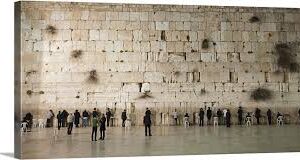
Wailing Wall

We have been looking at the days and events “After Acts” – significant events in the church’s development and history. Not long ago we discussed a secular event – the burning of Rome – and how it impa. cted believers because of the concentrated persecution efforts of the Roman Empire. The church would spend the next 300 years suffering and struggling for social acceptance. Today our discussion will focus on the destruction of Jerusalem and its Temple.


Now as Jesus was going out of the temple courts and walking away, his disciples came to show him the temple buildings. And he said to them, “Do you see all these things? I tell you the truth, not one stone will be left on another. All will be torn down!”

Matthew 24:1-2

New English Translation

Matthew 24:1-2 NASB

Matthew 24:1-2 ESV

Matthew 24:1-2 NCV

Matthew 24:1-2 NKJV

Matthew 24:1-2 NIV

Matthew 24:1-2 NLT

Matthew 24:1-2 MESSAGE

Matthew 24:1-2 HCSB


https://www.historyskills.com/classroom/ancient-history/siege-of-jerusalem-ad-70

Catastrophic Destruction

Today we look at another secular event holding vast spiritual significance for both Judaism and Christianity. In 70 AD the land of Judea was plunged into cataclysmic chaos and turmoil. Scores of Jews throughout the land had made their way back to Jerusalem after the crushing defeat of the Roman garrisons in 66 AD by the Zealots. The Jewish population swelled, with over 100,000 people seeking to return home and to escape the spreading and strengthening persecution from the Empire. Bands of Zealots and other Jewish rebels roamed the countryside attacking Roman garrisons and all those accused of being sympathetic to the Roman cause.


The Power of Rome

In April of 70 AD the Roman General, Titus, who would later become Caesar, besieged the city and left the entire population trapped inside. As the Romans tightened their noose around the city, the Zealots began fighting with other, confused and scared Jewish groups inside the gates. Anarchy, fear, starvation, and mass burnings of supplies and food reigned supreme. Many Jewish families plummeted over the walls hoping to find solace in more open spaces.

The Roman army numbered about 30,000, overpowering the Jewish troops by over 6,000 soldiers. According to Tacitus, a Roman historian, there were about 600,000 visitors crowding the streets of Jerusalem for the Passover.

Rome surrounding the city for five months, prohibiting anyone from entering and killing anyone who tried to escape. Shortly after five months, the Roman soldiers stormed the walls. The weakened and frustrated Jewish army could not muster the energy to fight off the intruding soldiers. The walls gave way with a thundering roar, the Temple and other buildings were burned to the ground, and the city was left ruined and desolate.

Records show that over a million Jews were killed. Legions of Roman soldiers took another 95,000 captivates away to Caesarea. One of those captured was the historian Josephus. Many Christians had earlier fled from the city, relying on the words of Jesus (Matthew 24).

WEB RESOURCES | DESTRUCTION OF JERUSALEM


Impact of the Destruction of the City

In the very late fourth century, biblical translator and monk Jerome described the Jews returning to Jerusalem to observe the ninth day of the month of Ab, the anniversary of the destruction of the Temple. “Overcome with mourning,” he wrote, they “are prohibited from entering Jerusalem. So that they may be allowed to weep over the ruins of their own city they pay a hefty price, and those who shed Christ’s blood now shed their own tears.”

Jerusalem has always been important to Christians. Contemplating that through its streets Jesus walked, taught, performed miracles, and more importantly, suffered, died, and rose again, the significance of Jerusalem to the Christian world appears obvious. This is why Helen, the mother of Constantine, built churches there in the fourth century to commemorate the events in the life of Christ. It is why Christians from every denomination visit Jerusalem visit every year.

For Christians, the destruction of the Temple placed an emphasis upon the absence of records of David’s lineage (no way to realize who should sit on the throne), the absence of records of Levi’s lineage (no way to realize who should serve as a priest), and the absence of Temple sacrifices. In all three, Jesus’ fulfillment of the Old Testament requirements shines in their absence.

For the Jews, the loss of the Temple was particularly devastating. The Temple was the center of their religious worship. It was also a symbol of national identity. Jews were displaced, sold into slavery, and fled from the region. They established communities throughout the Roman Empire and beyond. The different cultures shaped the Jewish experience and identity. Almost everything about Judaism underwent a shift in practice and thought. The result was the surging of Rabbinic Judaism, wrestling Jewish control from the Temple to the classroom.

For the Roman Empire, the destruction of Jerusalem secured a significant victory. The show of power strengthened the rule of Emperor Vespasian and his son Titus. The success was celebrated in Rome with a triumphal procession, as seen on the Arch of Titus. The victory consolidated the power of the Empire after the struggles of the year of Four Emperors.

Conclusions

As we bring our lesson on the destruction of Jerusalem and its Temple to a close, here are some questions for you to ponder about the truths of this lesson.

  1. Can the government bring an end to religious activities?
  2. At what point does a believer have to rebel against the government?
  3. If Jesus fulfilled Old Testament prophecies, why do some Christians still treat Israel with special consideration? Do you think that God still has plans for Israel and Jerusalem?

Who got to decide what books were included in the Bible? When and how did the books of the New Testament come together? Those are great questions to ask, and prove a real interest and depth to the desire to understand the foundation of our faith. Let’s explore those questions as we tackle the formation of the canon of the New Testament.


All scripture, breathed as it is by God, is useful for teaching, for rebuke, for improvement, for training in righteousness,

2 Timothy 3:16

New Testament for Everyone

2 Timothy 3:16 NASB

2 Timothy 3:16 ESV

2 Timothy 3:16 NCV

2 Timothy 3:16 NKJV

2 Timothy 3:16 NIV

2 Timothy 3:16 NLT

2 Timothy 3:16 MESSAGE

2 Timothy 3:16 HCSB


The term “canon” refers to the collection of books which are received and accepted as in some way inspired by God for inclusion in the Bible. The words of these books are considered authoritative for the faith and life of Christians. While the Old Testament was the supreme authority for devout Jews, those who followed Jesus as their master and Lord needed teachings which supported the concept of grace and resurrection above and beyond the Law.

All Pages

The writings of Christians do not negate the importance of the Hebrew traditions. With one possible exception (2 Peter 3:16), all of the references in the New Testament to “the scriptures” refer to the Jewish writings. Like every faithful Jew, Jesus accepted the Old Testament as the word of God. While many of His teachings were based on Old Testament truths, it is most significant that He found His own ministry foretold in the writings of the past (Luke 4:16-21; Luke 24:24-27, 44-46; John 5:39).

Old Testament Fulfilled by New Testament

The apostles and early church leaders did not preach the Old Testament. Instead, they bore witness to Jesus and His ministry. Jesus came to fulfill the Law and the Prophets – that is to bring them to a completion (Matthew 5:17). When they used the Old Testament, it was to show that Jesus was the Messiah and that His life, ministry, death and resurrection had been predicted by the prophets of old.

We should not be surprised, therefore, that the words of Jesus were treasured and quoted. Believers who had been eyewitnesses to the ministry and miracles of Jesus would re-tell His teachings and stories based upon their memories. The words and teachings of the Twelve who followed Jesus most closely also took on significance and authority. It is natural that when their teachings began to be written, the documents were circulated among the believers and read during times of worship (Colossians 4:16; 1 Thessalonians 5:27; Revelation 1:3).

As each gospel was completed, the content was approved because of the respect given to its author (John 21:24). The gospel accounts were used for pubic reading, first in the location of its composition. Matthew’s gospel was probably written in or near Jerusalem. Mark traveled extensively but probably wrote under the guidance of Peter around or near Rome. Luke traveled with Paul and may well have written his gospel while he was in Rome with an imprisoned Paul. John most likely wrote while he was exiled on Patmos which is near modern Turkey. These writings soon were copies and circulated to other cities and churches.

Copying the Scriptures

The collecting and copying of Paul’s letters must have begun early probably within his own lifetime. He instructed that two churches interchange his letters – most likely making copies of them (Colossians 4:16). Peter mentions Paul’s writings in one of his letters (2 Peter 3:16). The copying and circulating of letters was occuring before Peter’s death in the mid-60’s.

Many early Christians enjoyed the foundation and heritage of the Jewish faith. Jewish believers were meticulous in copying Scripture because of its inspiration. They clung to the tradition that no jot or tittle would pass away – no t uncrossed, no I undotted – from God’s word. The early Christians maintained the same reverence for their sacred writings.

Two interesting pieces of information need to be considered at this time. Clement of Rome, who many consider was personally mentored by Paul, wrote in a letter to the Corinthians in about 95 about apostolic authority. He specifically quotes from 1 Corinthians and Hebrews. He gives evidence of being familiar with several other authoritative books being circulated at the time.

A fragment of a listing of the books written by Paul was discovered in 1930 known as the Chester Beatty papyrii. These documents range in age from the second to the fourth centuries. The listing, which includes 14 of Paul’s books in order of largest to smallest, Hebrews is properly sandwiched between the name of Romans and the name of 1 Corinthians.

Criteria for Canon Acceptance

Did there seem to be a criteria for the books that were circulated and seen as authoritative? Theologians speculate what criteria provided the foundation, but most agree on three or four items that were critically necessary. First, the books that were recognized as authoritative had to have either apostolic origin or a strong apostolic connection. Jesus’ apostles wrote most of the books of the New Testament. Of the gospel writers, Matthew and John were apostles. They traveled with Jesus during the three and a half years of His ministry. Just as in research today, primary sources give the most credibility.

Just because an apostle’s name is circulated with the writing did not assure acceptance. The Gospel of Thomas began to be circulated hundreds of years after the Apostle Thomas. The content was filled with gnostic thought, clearly contradicting the teaching of Jesus and other apostles. Many of the stories raised serious questions about their authenticity. This particular gospel was rejected as not carrying the authority or the grandeur of content.

One of the leading New Testament scholars of the 1800s was a Presbyterian scholar named B.B. Warfield (1851-1921). Warfield served significant positions as a part of the Princeton Theological Seminary. His commentaries and books on Paul’s theology are still today considered definitive classics.

Warfield believed the crux of the New Testament canon was clearly decided upon by the end of the first century.

In an article written in 1892, Warfield writes, “In every case the principle on which a book was accepted, or doubts about it laid aside, was the historical tradition of apostolicity.”

In addition to the authority of the apostles, another criteria used was the content of the writing. Early church leaders expected the content of the writing to affirm, not contradict, the writings of other Scripture. Much in the New Testament teaches how Christ fulfilled or expanded upon the teachings of the Hebrew Scriptures. One should expect the continuity of God’s Word throughout history.

Finally, the books needed to be widely recognized and widely shared. As books were being considered for the canon, the church leaders’ job was made easier because so many writing were already recognized throughout the Mediterranean region as authoritative.

The canon of the Scriptures was not settled until the Roman Catholic Church councils of Nicea (325), Rome (382), the Synod of Hippo (393) and two councils of Carthage (397 and 419). As our culture becomes increasingly secular, many will cast doubt on the Bible’s origins. Christians need to prepare the minds and action to confidently assert that the Scripture is the work of God, recognized by churches over the years.

In the vivid words of biblical scholar, J.I.Packer, “The church no more gave us [the] canon than Sir Isaac Newton gave us the force of gravity.”

Conclusions

As we bring our lesson on the formation of the New Testament canon to a close, here are some questions for you to ponder about the truths of this lesson.

  • What does it mean to you to say that the Bible is authoritative, inspired, and inerrant?
  • What is your favorite translation of the Bible and why?
  • Has information about how the New Testament was formed done anything for your faith?

[content_block id=13487]

The lives and deaths of the Apostles are a subject of deep historical and religious significance. These twelve men, chosen by Jesus, played pivotal roles in shaping the early church. Their undaunted faith, even while facing a martyrs death, increases the level of certainty regarding the historicity of the resurrection. The likelihood of people dying for their own lies is practically nil.


Around that time, King Herod began to use violence towards some members of the church. He killed James the brother of John with the sword.

Acts 12:1-2

New Testament for Everyone


Our understanding of the significance of these martyrs must start with the word itself. Our English “martyr” comes from the Greek word μάρτυρας, the word for “witness.” Originally the word had no particular religious connotation. It referred to someone who witnessed a fact or an event.

The term quickly evolved in the fifty years after the resurrection of Jesus. The overwhelming majority of those who were eyewitnesses of the resurrection of Jesus were put to death. These individuals – both men and women – were unwilling to recant or deny their testimony even with the threat of death.

The Twelve Apostles were a group of ordinary men who were tasked to play an extraordinary role in the founding and spread of Christianity. Understanding the circumstances around their deaths provide insight and challenges for us today. Let’s take a moment to look at a little bit of the ministries and deaths of the earliest leaders of the church.

Judas Iscariot

The act of betrayal will forever mark the life of this Judas. His decision to make an identifying mark of Jesus has resonated throughout history. The betrayal by Judas is a pivotal event in the New Testament as it set into motion the circumstances which would lead to the crucifixion. Matthew tells us that Judas agreed to hand Jesus over to the Jewish religious leaders for 30 pieces of silver.

Judas’ story is a complex and tragic one. His fate stands as a sober reminder to us the fine line between service and sin. His life ended with a leap off a hill into self-inflicted hanging.

Simon Peter and Paul

If you are familiar with any of the deaths of the apostles, it is probably that of Peter. After multiple trials in Rome, Peter was crucified as Nero’s persecution of the church and its leaders was reaching a peak. The exact time and manner of Peter’s death is a little less certain, though the time would have been late in the year of 67 or very early in 68.

Origen tells us that Peter felt unworthy to be crucified in the same manner as his Lord and Savior and requested to be crucified upside down.

There is convincing evidence inside the Bible and outside the Bible for the martyrdom of Peter (John 13:36-38; John 21:18-19; First Clement 5; Ascension of Isaiah 4:2-3; Against Heresies 3.1.1; and more). But what about the tradition that he was crucified upside-down? Did Peter consider himself unworthy to be crucified in the same manner as His Savior?

The first record claiming Peter was crucified downward appears in a late second-century document called The Acts of Peter. This account is filled with legends and this crucifixion story may be one of them. This source claims that the upside-down cross symbolized the fallen state of humanity while the crucifixion of Jesus restored humanity’s stature and place.

History does tell us that the Romans were known to crucify its victims upside down. The intent was to shame them in an even more grotesque way, as well as hastening their death. The upside-down crucifixion of Peter is historically plausible. But the victims of crucifixion were not given the chance to make requests about the method of their death.

Paul the Martyr

Those in the city of Rome placed an accusation against the Roman Christians that they hated humanity. The roots of these thoughts probably had roots in the fact they would not participate in the social and civic life which was intertwined with pagan worship. Whatever the reason, once Nero’s madness inflamed, Christians were persecuted with a vengeance. As a “ringleader” (Acts 24:5), Paul was rearrested and at some point, tradition says, placed in the Mamertine Prison.

The Mamertine Prison was known in some circles as “The House of Darkness.” Few prisons were as dim, dark, dank and dirty as the lower chamber which Paul occupied. Known in earlier times as the Tullianum dungeon, its neglect, darkness, and stench gave it a hideous and terrifying appearance, according to Roman historian Sallust.

As a Roman citizen, Paul was afforded the privilege of a swift and the minimally pain-ridden death. As such, the conclusion stands that Paul was beheaded as a martyr. There is no proof as to what happened to his body after death. Commentary author Albert Barnes indicated there were two traditions. First, Lucina, a Roman noblewoman, buried his body on her land beside the Ostian Road. Second, his body was taken to the catacombs below the city and left along with Peter’s body.

Andrew

Tradition holds that following Jesus’ resurrection, Andrew was swept away by the call to evangelize, after all it was Andrew who led John, James and Peter to meet Jesus. There is strong local beliefs that Andrew traveled as far as the region of Scythia which would be in the modern-day Ukraine and Russia. He preached the message with conviction and enthusiasm and has strong roots in the Russian Orthodox Church.

His faith led to the ultimate sacrifice of his life. Apparently he ends up in Patras, Greece where he is called before the Roman proconsul Aegeates who tried to convince Andrew to forsake Christianity. He was scourged and crucified on an X shaped cross, now known as St. Andrew’s Cross. He was tied to the cross rather than nailed to prolong the pain. Andrew lived for two days on the cross, during which time tradition says he witnessed to all who passed by.

John

Traditional Christian thinking assumes that John died of natural causes on the Isle of Patmos, where he lived as an exile. Mormon traditions say that John never experienced death but continues to take forms and preaches today.

James (John’s brother)

There is actually biblical scripture presenting the details of James’ death (Acts 12:1-2). James was put to death by the Herod of the day.

Bartholomew (Nathaniel)

Very little is known about Bartholomew’s life or death. The tradition that does exist says Bartholomew did not venture too far away from the Galilee and Decapolis area. Most accounts suggest that he was flayed – skinned alive – before being crucified.

Matthew (Levi)

Matthew was a wealthy tax collector in his days prior to following Jesus. His wealth probably allowed him to travel farther than many of the disciples. Tradition has Matthew journeying to remote places in Africa. Though not much more is known beyond this, legend says that he also died as a martyr. Most agree that he was stabbed in the back by a swordsman in Ethiopia, the retaliation of King Hertacus who often received Matthew’s criticism for his immorality.

Thomas

According to early Christian traditions, Thomas traveled eastward to spread the gospel into India. He is believed to have founded several Christian communities there. His missionary work in India is revered. It is said that Thomas became a martyr for the faith, being killed by a lance. The Greek Orthodox Church commemorates his death on October 6th.

Philip

Philip appears to have served as a missionary in Egypt as well as in the Phrygia region of Asia Minor. There are even records indicating he had a powerful ministry in Carthage were he converted the wife of the Roman proconsul. The proconsul had Philip arrested and put to death in retaliation. The cruel means of death is unsure, although legend speaks to either hanging or crucifixion.

James (son of Alphaeus)

This James is mentioned a couple of times in the Bible, so we know that he was around Jerusalem for at least five or six years after Jesus’ resurrection. There are several speculations about how he died. When there are this many ideas, it is difficult to know which one to believe. One has him being crucified in Egypt another has him sawed to pieces in somewhere in Greece. James is honored by several denominations, but our real knowledge of him seems to have him settled in Judea. The two traditions that are more believable place his death around the temple – which would have him dying before 70AD. One has him preaching on a wall of the temple, where he was thrown off by scribes and Pharisees then stoned. The other theory has him beaten, stoned, and clubbed to the head around the temple area.

Simon the Zealot

Not much is known about the ministry or death of Simon. Some traditions have him going to Edessa which is in Mesopotamia or modern-day Turkey. Other traditions have him going to Africa and still others have him crucified in England.

Jude

About the only significant tradition for Jude is that he died in Armenia where he was crucified and shot with arrows.

Conclusions

As we bring our thoughts to a close about the deaths of many of the early church leaders, here are some points to ponder about the concepts of today’s lesson.

  • What lessons can we learn from the example of the martyrdom of so many saints?
  • Consider all of the apostles. Whose faith would you like to imitate and why?
  • If you could choose somewhere to go and be a missionary, where would it be and why?

[content_block id=12408]

Travels on the Mediterranean Sea

Paul’s travels from the close of the book of Acts to his death about 5 years later are not outlined in the Scriptures. Some theologians debate whether an official “journey” actually took place. But the evangelistic and pastoral nature of the Apostle to the Gentiles makes it difficult to believe that he stayed still and silent during those years. With glimpses from traditions and historians, as well as hints in his own writings, it is possible to construct a possible sketch of his activities.

But, at the same time, get a guest room ready for me. I’m hoping, you see, that through your prayers I will be granted to you.

Philemon 22

New Testament for Everyone


Philemon 22 NASB

Philemon 22 ESV

Philemon 22 NCV

Philemon 22 NKJV

Philemon 22 NIV

Philemon 22 NLT

Philemon 22 MESSAGE

Philemon 22 HCSB


Early church historian, Eusebius, writing in the fourth century, recorded that the most prominent church traditions had Paul released from imprisonment in Rome only to be re-arrested several years later. The second arrest led to his martyrdom under the direction of Emperor Nero.

Paul himself suggested he desired his travels to include visiting Spain (Romans 15:24). There is no proof in any of his letters, but traditions in Spain as well as other early church fathers claimed that Paul did travel to Spain. We spoke of this journey in last week’s lesson, On to Spain.

In his letter to the Corinthians, church father Clement of Rome affirmed that Paul “had gone to the extremity of the west.” At the time, such a phrase was used in Rome as travels to the country of Spain. Fourth-century father John of Chrysostom mentioned, “For after he had been in Rome, he returned to Spain, but whether he came thence again into these parts, we know not.” Cyril of Jerusalem (also writing in the fourth century) wrote that “Paul carried the earnestness of his preaching as far as Spain.”

Possible Chronology of the Travels

It is probable that Paul left his imprisonment in Rome and immediately set sail for Spain. His travels would have eventually brought him back to the middle of the Mediterranean where Paul made several stops. He finally was re-arrested and taken back to Rome for the final time.

Theologian B.B. Warfield believed that after Paul’s release he first made a trip East to visit Philippi and Colossae, traveled West to fulfill his cherished dream to preach in Spain, and finally a return trip East. During this trip, soldiers arrest Paul for the final time.

Regardless of the chronology, there are other locations that Paul seems to have been focused upon to visit. Let’s look at them briefly.

Travels to Philippi and Colossae

Paul seems to have wanted to visit the churches of Macedonia. Visiting these churches would have included a stop with the Philippians. Throughout Paul’s writings, it is evident that the Philippians held a special place in the Apostle’s heart (Philippians 1:7-8; Philippians 4:15-16; Romans 15:26; 1 Corinthians 16:1-4). Along with Philemon (Philemon 22) Paul indicates that he wants to visit the Philippians (Philippians 2:24). As he writes in 1 Timothy 1:3, it appears that he did in fact enter into Macedonia

It seems likely that stops in Greece would have been convenient at the time of travels to Macedonia. We know of his ministries in Corinth and Thessalonica.

After travels in Macdeonia, Paul seems to have been heading to Colossae and its nearby Ephesus. Timothy was known to be in Ephesus and Philemon, his dear friend, is traditionally located in Colossae.

Paul’s “Pastoral Epistles” – written after Acts – brought information to two of Paul’s disciples. Titus and Timothy would serve as leaders in the church as the apostles were dying out. Titus remained in Crete (Titus 1:5) and Timothy found himself stationed in Ephesus. It is likely that Paul wanted to connect with both during his travels.

Jews and Gentiles

The peoples of the world are in chaos and turmoil at this point in Mediterranean history. The Roman Empire has officially blamed Christians for the burning of Rome. But to the Romans, Christianity was just a sect of the bigger religion, Judaism. Faithful Jews were unsure where they could settle and be safe.

Roman soldiers chased Jewish believers from Jerusalem as days drew near for its destruction. Soldiers now drove them from the streets of Rome. Turmoil ruled the Mediterranean area. If Hebrews were written by Paul (the book proves at least that it was written by a close associate of the Apostle), he would have had them on his mind because they were everywhere in the area.

Destinations Mentioned by Paul in His Later Epistles

The Bible Journey website offers a possible route for Paul after he returns from Spain.

Concluding Comments

As we bring our thoughts about the travels that Paul made after the close of the book of Acts, here are some points to ponder about the concepts of today’s lesson.

  • Is it easier or more difficult for you to display your faith when you are away from home? Why or why not?
  • What is the correlation between persecution and suffering and maturity and conviction of faith? Why do you think that?
  • What made the gospel so appealing to so many different cultures? Is that true today?

content_block id=13484]

Beaches of Spain

At the close of our last lesson, we are assuming that the time Paul spent in Rome at the close of Acts was drawing to a conclusion. He was anticipating his release either because of the declaration of his innocence or the neglect of his accusers to arrive in Rome. Did Paul’s next steps include Spain?

Click on the pictures to visit several websites around Tarragona, Spain.

But now, finding myself with no more room in these regions, I have a great longing to come to you now at last after so many years, 24 and so to make my way to Spain. You see, I’m hoping to see you as I pass through, and to be sent on my way there by you, once I have been refreshed by you for a while.

Romans 15:23-24 NTE

New Testament for Everyone

Romans 15:23-24 NASB

Romans 15:23-24 ESV

Romans 15:23-24 NCV

Romans 15:23-24 NKJV

Romans 15:23-24 NIV

Romans 15:23-24 NLT

Romans 15:23-24 MESSAGE

Romans 15:23-24 HCSB

Other than the existence of the Pastoral Epistles, the New Testament is silent about Paul’s release after the close of Acts. Traditions and documents outside of the New Testament firmly establish his release.

Assuming that he was released, chronology places about five years between the end of Acts and Paul’s death at the hands of the Roman Emperor Nero. How would Paul have filled those five years?

The Bible helps us a little with developing a travel itinerary for the Apostle. In the book of Romans , we see Paul’s intention to visit Spain after he reaches Rome (Romans 15:23-24). It seems very logical that although his circumstances in reaching Rome had changed, getting to Rome would still provide Paul with the first step toward visiting Spain.

Destinations Mentioned by Paul in His Later Epistles

  • Colossae (Philemon 22)
  • Ephesus (1 Tim 1:3, 3:14)
  • Macedonia (1 Tim 1:3)
  • Philippi (Phil 1:25; Phil 2:24)
  • Spain (Rom 15:24)
  • Crete (Titus 1:5)
  • Asia Minor (2 Tim 4:13, 20)
  • Greece (Titus 3:12, 2 Tim 4:20)
  • Rome (2 Tim 1:16-17)

Evidence of Paul’s activities after Acts is found in three early Christian documents. In AD96 Clement of Rome wrote an epistle to the Corinthians. Realistically, Clement remains identified as one of Paul’s disciples (see Philippians 4:3). In this work Clement states:

Paul had been seven times in bonds, had been driven into exile, had been stoned, had preached in the East and in the West, he won the noble renowns which was the reward of his faith, having taught righteousness unto the whole world and having reached the farthest bounds of the West.

External Evidence Includes Spain

For a Roman, “the farthest bounds of the West” was a phrase used by Roman writers to refer to Spain. The specific area of Spain would be the Iberian peninsula.

In addition, the Acts of Peter, written in the second century, informs us thoroughly about the departure of Paul from the Roman harbor of Ostia to Spain. Ostia had become a major port town for Rome. Ships sailed regularly for the Spanish ports of Cadiz and Tarragona. According to Piny the Elder, the journey to Spain from Rome took about four days.

Finally, the Muratorian Canon, (perhaps our oldest known list of the all of the books of the New Testament) compiled by an anonymous Christian around AD170, refers to the Spanish mission of Paul. This document, originally written in Green and then translated into Latin, includes the following notation connected with the book of Acts:

Luke puts it shortly to the most excellent Theophilus that several things were done in his own presence, as he also plainly shows by leaving out the passion of Peter and also the departure of Paul from town on his journey to Spain.

Strong Local Tradition in Spain

There is also strong local tradition in Spain of Paul’s presence within the Christian community. This is especially true of the town of Tarragona. An 8th century Spanish tradition relates that during his mission to the Catalans, the Apostle Paul consecrated Prosperus as the first bishop of Tarragona. Because of intense persecution by the Romans, Prosperus fled to Regium Lepidum where the people immediately accepted as him bishop of the city “because he is the successor of Paul in Tarragona.”

The Diocesan Seminary, built according to the Tarragonian traditions, stands on the site of Paul’s preaching in the city. There are two statues in the city of the Apostle Paul to commemorate his preaching and the establishment of a church there.

Concluding Comments

As we bring our thoughts about the travels that Paul made after the close of the book of Acts, here are some points to ponder about the concepts of today’s lesson.

  1. What example does Paul’s missionary journeys set for us as we think about evangelizing the world? Where does your “missionary journey” take you?
  2. How does the message of the Gospel differ depending upon the knowledge and background of the listener? How does it stay the same?
  3. Think about several good preachers that you have heard speak. What about their style and content makes them effective ministers of the gospel?

[content_block id=13455]

Firstly, let’s turn our attention and our studies to what takes place in the history of the church “after Acts.” Luke ends his historical treatise explaining that Paul was “preaching the kingdom of God and teaching about the Lord Jesus Christ quite openly and unhindered” (Acts 28:31 RSV). Ironic, isn’t it? However, for the gospel to be preached unshackled, Paul needed to be wearing shackles. Where would the church go if God’s Word were unshackled?

Welcome to the After Acts study series. The graphic below lists our lessons. The first six lessons and the last lesson are connected. I will connect the other three lessons sometime on Tuesday, May 7th. Each lesson provides you with a Scripture, some things to think about, and some resources for you to explore your interests. Enjoy your studies!

Firstly, let’s turn our attention and our studies to what takes place in the history of the church “after Acts.” Luke ends his historical treatise explaining that Paul was “preaching the kingdom of God and teaching about the Lord Jesus Christ quite openly and unhindered” (Acts 28:31 RSV). Ironic, isn’t it? However, for the gospel to be preached unshackled, Paul needed to be wearing shackles. Where would the church go if God’s Word were unshackled?

After Acts

Subsequently, what happened to Paul after the final page is turned in the book of Acts? Even bigger, what happened to the Twelve Apostles, most of whom are not mentioned in the book of Acts? Are there traditions about their activities? Are the traditions reliable? How trustworthy is the evidence? This is a portion of the information we will consider over the next few weeks.

Two Examples After Acts

Specifically, for our study, let’s consider two significant examples. What do we know about the ministry and death of the Apostle Bartholomew? What happened to him after Acts? One popular tradition says that Bartholomew was flayed to death. The tradition is first seen among the Armenian churches in the seventh century. Does this significant passage of time mean that the tradition is false?

Not necessarily. Flaying as a form of punishment can be traced back before the time of Christ. It was practiced in Turkey, China, and many other eastern countries. At best, this tradition is possible. The tradition in eastern countries may help us understand the direction that Bartholomew traveled either immediately after Pentecost or as Rome began persecuting the church’s leadership.

The Death of Peter

Furthermore, let’s talk about a tradition that happened after Acts with which we may be more familiar. There is convincing evidence inside the Bible and outside the Bible for the martyrdom of Peter (John 13:36-38; John 21:18-19; First Clement 5; Ascension of Isaiah 4:2-3; Against Heresies 3.1.1; and more). But what about the tradition that he was crucified upside-down? Did Peter consider himself unworthy to be crucified in the same manner as His Savior?

The first record claiming Peter was crucified downward appears in a late second-century document called The Acts of Peter. This account is filled with legends and this crucifixion story may be one of them. This source claims that the upside-down cross symbolized the fallen state of humanity while the crucifixion of Jesus restored humanity’s stature and place.

History does tell us that the Romans were known to crucify its victims upside down. The intent was to shame them in an even more grotesque way, as well as hastening their death. The upside-down crucifixion of Peter is historically plausible. But the victims of crucifixion were not given the chance to make requests about the method of their death.

Some Exciting Discoveries

What happened to the church and its leaders after Acts? You may be more than surprised when you discover some of the answers.